

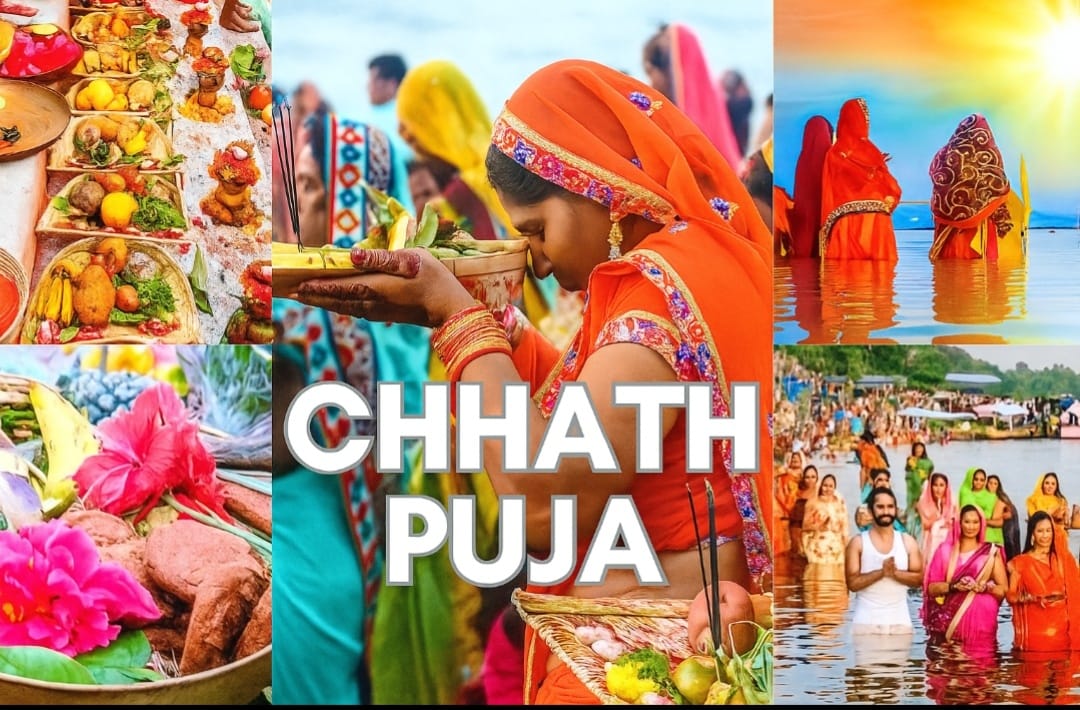
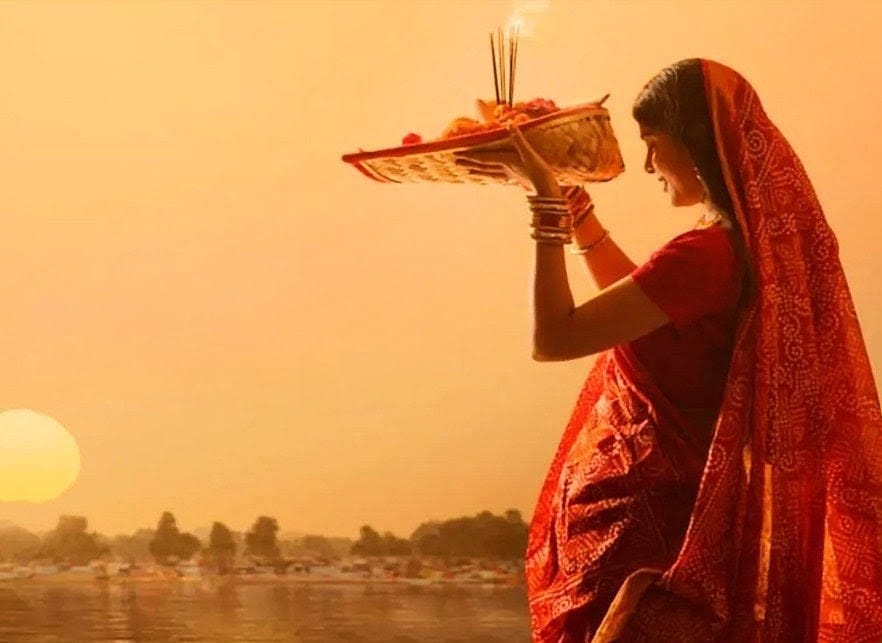
As the golden sun dips into the horizon and devotees stand waist-deep in the sacred waters, Chhath Puja unfolds — a festival of faith, purity, and gratitude. With baskets full of offerings and hearts brimming with devotion, millions bow to the setting and rising Sun, the eternal giver of life and energy. This divine celebration isn’t just a ritual; it’s a poetic harmony between humanity and nature, light and life.
नमः सूर्याय शान्ताय सर्वरोग निवारिणे
आयुर्य मैस्वैर्यं देहि देवः जगत्पते।।
The grand and spiritually charged Chhath Puja 2025 has officially begun today, Saturday, October 25, with the first day known as “Nahay Khay” marking the commencement of this four-day long Mahaparv (great festival). Across Bihar, Jharkhand, Uttar Pradesh, Madhya Pradesh, and eastern India, lakhs of devotees are observing this festival with immense faith, cleanliness, and discipline — the hallmarks of Chhathi Maiya’s worship.
This festival, one of the oldest Vedic traditions, is dedicated to Lord Surya (the Sun God) and Chhathi Maiya (Usha, the goddess of dawn). It signifies gratitude to the life-sustaining Sun and the forces of nature that nurture existence on Earth. Every ritual of this festival, observed with unmatched devotion and strict purity, holds deep spiritual and scientific significance.
Chhath Puja 2025 Calendar and Important Dates
Day 1 – Nahay Khay (25 October 2025): The festival begins with a ritual bath and preparation of sanctified food.
Day 2 – Kharna (26 October 2025): Devotees observe a day-long fast and prepare gur ki kheer (jaggery rice pudding) and roti for evening worship.
Day 3 – Sandhya Arghya (27 October 2025): The grand evening offering to the setting sun, performed at riverbanks and ponds, accompanied by devotional songs and folk rituals.
Day 4 – Usha Arghya (28 October 2025): The concluding morning offering to the rising sun, symbolizing light, purity, and new beginnings.
The Rituals of Nahay Khay: The Beginning of Purity and Devotion
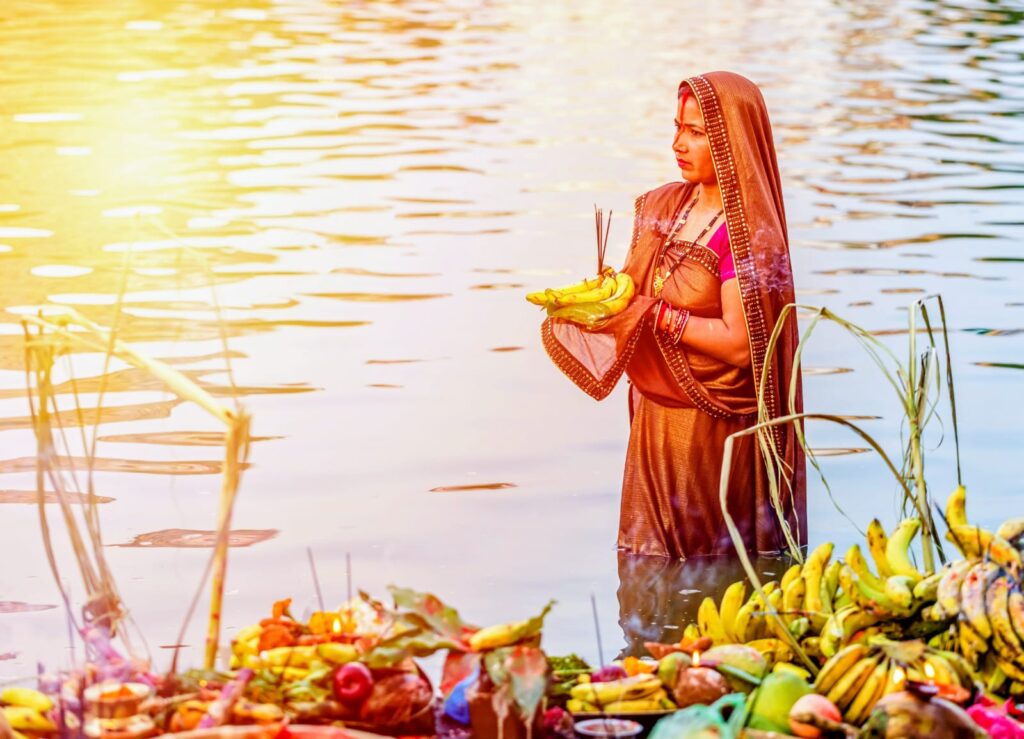
On the first day, devotees wake up early before sunrise and take a holy bath, preferably in a clean river or pond. Facing east, they offer Arghya (water offering) to the Sun God using a copper vessel (tamba lota) filled with water, flowers, rice grains (akshat), and jaggery.
While offering water, the sacred mantra “ॐ सूर्याय नमः (Om Suryaya Namah)” is chanted with deep reverence.
The act of offering water to the rising sun is not only religious but also spiritual and scientific — it is believed to cleanse the aura, enhance willpower, and balance solar energy in the human body.
After the prayer, devotees take the sankalp (vow) to observe the fast with full devotion and purity. The kitchen is cleaned meticulously; utensils are purified, and only vegetarian food is prepared. The meal for Nahay Khay includes lauki-chana dal, bhat (boiled rice), and tulsi-infused water, which is first offered to the deity before being consumed by the devotee.
Chhath Puja Samagri (Essential Items for Puja)
The festival is known for its rich ritualistic preparation. Each offering has symbolic meaning connected to nature and fertility. The key items include:
Daura and Soop (bamboo baskets and winnows) for carrying offerings
Thekua, a traditional sweet made of wheat flour and jaggery
Fruits: sugarcane, bananas, coconuts, apples, and sweet lemons
Rice, wheat, and jaggery
Earthen lamps (diya) and incense sticks
Kharna Prasad: jaggery kheer and roti
Sweets, flowers, and turmeric (haldi)
Each of these items represents purity and prosperity, reflecting gratitude towards nature’s abundance.
Spiritual Meaning of Chhath Puja
The essence of Chhath Puja goes far beyond ritual worship. It celebrates the bond between the Sun and life on Earth. According to Hindu scriptures, Surya is the only visible deity who sustains life through energy and light. Worshiping him is considered a way to connect directly with the cosmic force of life.
Chhathi Maiya, also known as Usha, is believed to be the sister of Lord Surya. She symbolizes dawn, new beginnings, and motherhood. Worshiping her is said to bless devotees with good health, children, and overall well-being.
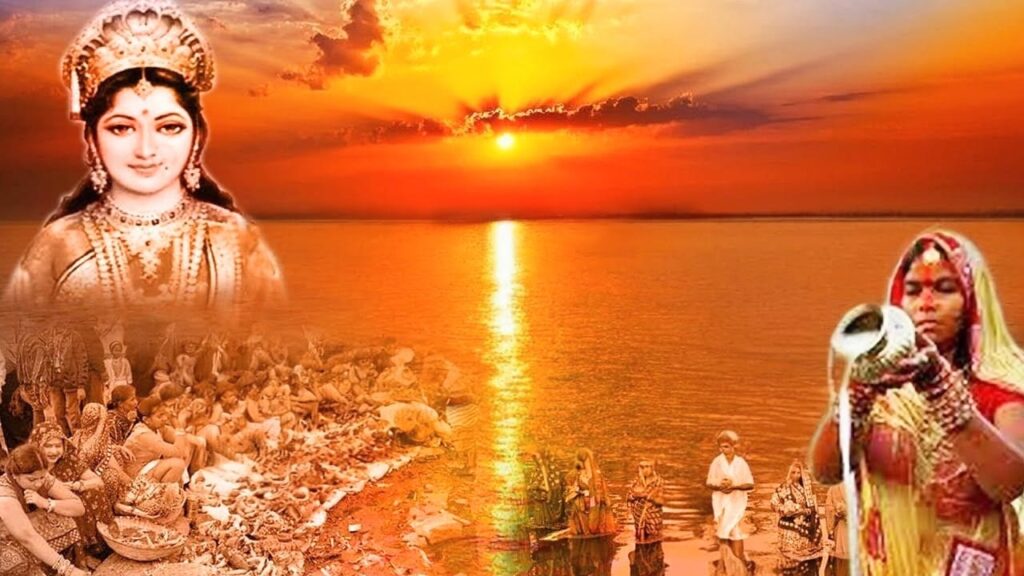
Chhathi Maiya Vrat Katha (The Legend Behind the Festival)
As per the ancient Vrat Katha, the tradition of Chhath Puja dates back to the Mahabharata and Ramayana eras.
In the Ramayana, it is said that Sita Mata observed this fast after returning from exile, offering Arghya to the Sun to express gratitude for their return to Ayodhya.
In the Mahabharata, Kunti and Draupadi are said to have performed Chhath Puja to overcome difficulties and attain prosperity for their family.
The legend also narrates that King Priyavrat and Queen Malini, who were childless, observed this fast upon the guidance of sage Kashyapa. As a result, they were blessed with a son — since then, the fast is believed to grant progeny and divine blessings to devotees.
Community and Environmental Harmony
One of the most striking aspects of Chhath Puja is its connection with environmental purity. Before the puja, families clean their surroundings, riverbanks, and ghats, reflecting the message that cleanliness is next to godliness.
Women, known as Vratis, observe a rigorous fast for 36 hours — without food or even a sip of water — demonstrating immense willpower and devotion. The songs sung during the rituals, such as Kaanch hi baans ke bahangiya and Pahile pahil chhathi maiya, preserve the region’s folk heritage.
The festival beautifully merges faith, family, and ecology, teaching lessons of balance, gratitude, and discipline.
Puja Vidhi for Offering Arghya
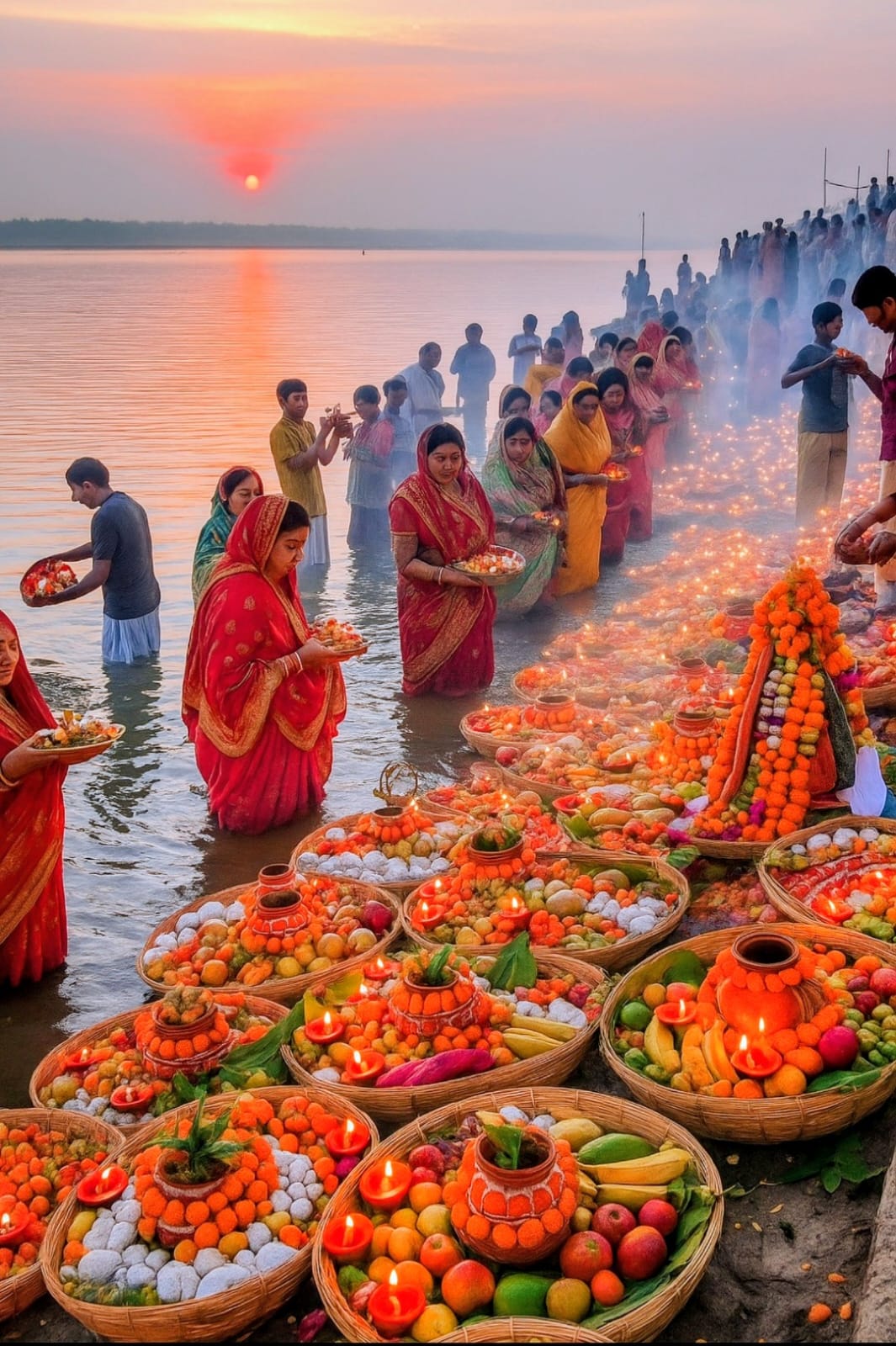
During both Sandhya Arghya and Usha Arghya, devotees stand half-immersed in water, holding baskets filled with fruits, Thekua, and diya. As the sun sets or rises, they offer water and prayers while singing devotional hymns. This act signifies the acknowledgment of life’s dualities — light and darkness, rise and fall — and one’s surrender to divine cosmic energy.
Significance of Donation and Charity
On Nahay Khay, devotees feed the poor, offer food to cows, and distribute fruits and sweets. According to belief, donating food and essentials brings divine blessings and spiritual merit (punya). Feeding a cow is symbolic of serving the divine mother herself, while helping the needy aligns one with the goddess’s compassion.
The Spirit of Faith and Purity
The four-day Chhath Puja is not merely a ritual — it is a journey of purification. It symbolizes the triumph of discipline over desire, devotion over materialism, and light over darkness. The meticulous observance, self-control, and cleanliness represent a higher form of spiritual consciousness that purifies mind, body, and soul.
From the ghats of Patna and Ganga banks in Varanasi to ponds in Delhi, Kolkata, and Ranchi — the echo of “Chhathi Maiya ki Jai” fills the air as thousands of diyas illuminate the evening sky, turning the festival into a breathtaking spectacle of devotion and divine harmony.
The Eternal Light of Chhathi Maiya
As the golden rays of the setting and rising sun touch the calm waters, devotees bow in silence, their hearts overflowing with gratitude and faith. Chhath Puja is not just a festival — it is a sacred dialogue between the soul and the cosmos, between human effort and divine grace. In every diya that flickers upon the river, there burns a prayer — for peace, for purity, for prosperity, and for the protection of all beings.
When the Vratis stand immersed in the holy waters, eyes closed and hands folded, they embody the timeless truth that “सूर्य ही जीवन है, और आस्था ही शक्ति।” (The Sun is life, and faith is strength.) Their unwavering devotion reminds us that the essence of spirituality lies in surrender, self-discipline, and gratitude for the simple blessings of nature.
As the Chhath Arghya concludes and the chants of ‘छठी मैया की जय’ echo through the dawn, the entire atmosphere transforms into a temple of light. The fragrance of devotion fills every heart, and the rising sun seems to whisper — Keep your faith radiant, your spirit pure, and your path illuminated.
जय छठी मैया ऊ जे केरवा जे फरेला घवद से, ओह पर सुगा मंडराए।
मारबो रे सुगवा धनुख से, सुगा गिरे मुरझाए ॥जय॥…….
……Amrita Pandey