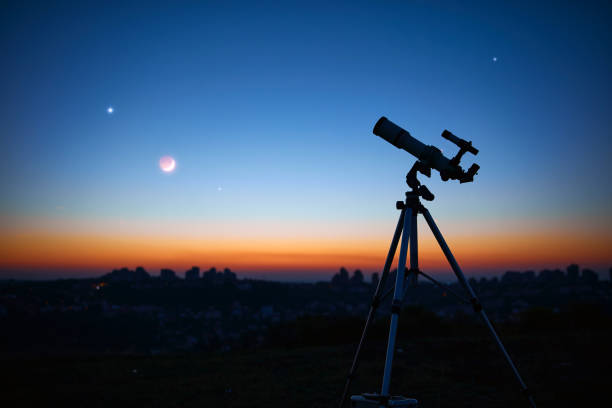

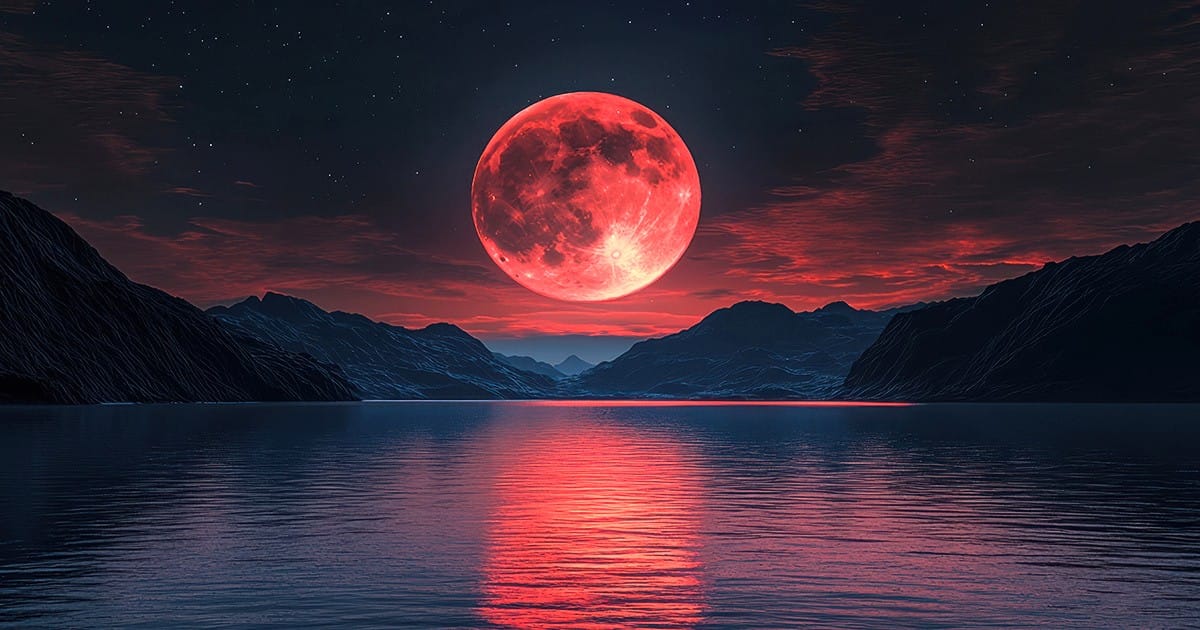
When the Moon glows deep red in the night sky, it’s hard not to pause and stare in awe. This celestial event, popularly known as a Blood Moon, has fascinated humans for centuries. While the sight often inspires wonder, it has also sparked myths, cultural beliefs, and even superstitions. But what really happens during a Blood Moon? Let’s explore.
What Exactly Is a Blood Moon?
A Blood Moon isn’t a different kind of Moon—it’s simply the total lunar eclipse viewed from Earth. During this event, the Earth moves directly between the Sun and the Moon. Instead of going completely dark, the Moon takes on a reddish hue.
The red color comes from a phenomenon called Rayleigh scattering—the same effect that makes sunsets and sunrises appear red. Earth’s atmosphere bends and filters sunlight, scattering shorter blue wavelengths and allowing the longer red wavelengths to reach the Moon’s surface. That’s why, instead of disappearing, the Moon shines like a glowing ember.
Why Does It Capture So Much Attention?
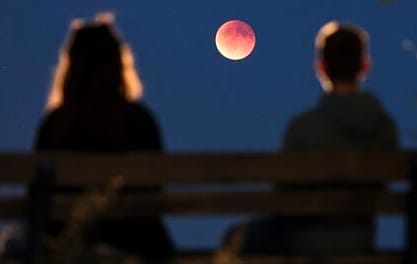
Part of the allure is rarity. While partial lunar eclipses happen fairly often, a total lunar eclipse that creates a vivid Blood Moon is less common. The drama of the color shift, combined with the Moon’s symbolic power in different cultures, makes it a headline event worldwide.
Myths and Cultural Beliefs
Ancient Civilizations often saw a Blood Moon as a sign of change, conflict, or rebirth.
In Hindu traditions, lunar eclipses (Chandra Grahan) are tied to mythology involving the demon Rahu, believed to “swallow” the Moon.
In Western folklore, a red Moon has been linked to omens, often tied to war or natural disasters.
Today, while science explains the beauty, many still celebrate the mystical aura of the Blood Moon, blending astronomy with cultural storytelling.
The Scientific Importance
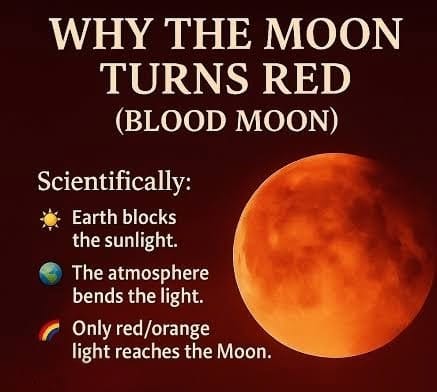
Beyond its beauty, Blood Moons are valuable for astronomers. Studying how Earth’s atmosphere bends light onto the Moon during the eclipse helps researchers understand atmospheric composition, pollution levels, and even climate changes over time.
When Is the Next Blood Moon?
In September 2025, skywatchers will get the chance to witness a Blood Moon, visible in many parts of the world including India. The eclipse will occur late at night, turning the Moon a dramatic shade of red for several hours.-
Final Word
A Blood Moon is more than a spectacle—it’s a reminder of the delicate cosmic choreography that connects Earth, the Moon, and the Sun. Whether you view it through the lens of science or spirituality, it remains one of the most mesmerizing sights in the sky.
So, when the next Blood Moon rises, step outside, look up, and enjoy a celestial performance that has stirred human imagination for millennia.